
Projects
Space Needle
Projects
Space Needle: A World Cup Transformation
FIFA World Cup 2026 Soccer Ball Roof Transformation
High-Profile Landmark Coating Project · Seattle, Washington
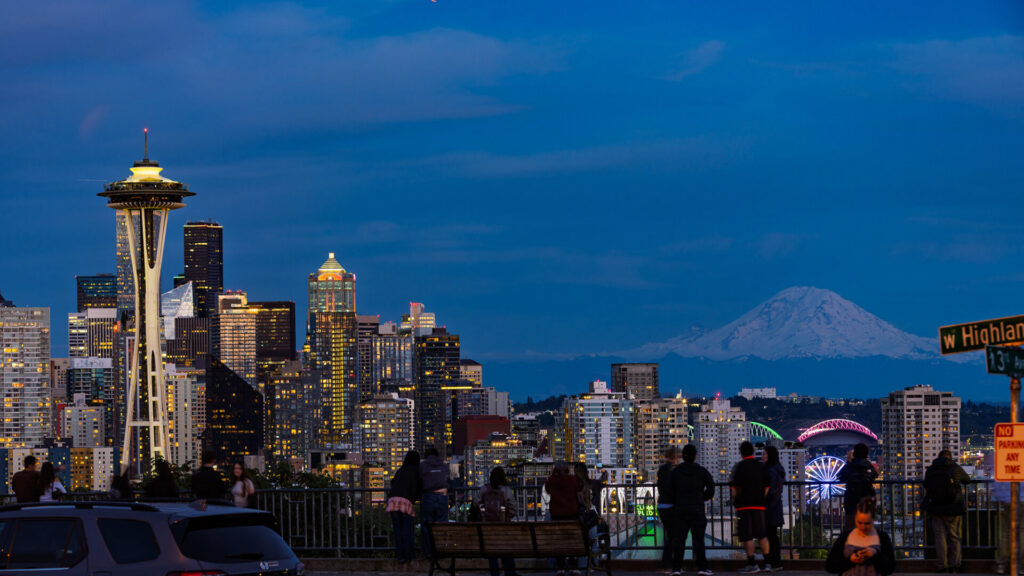
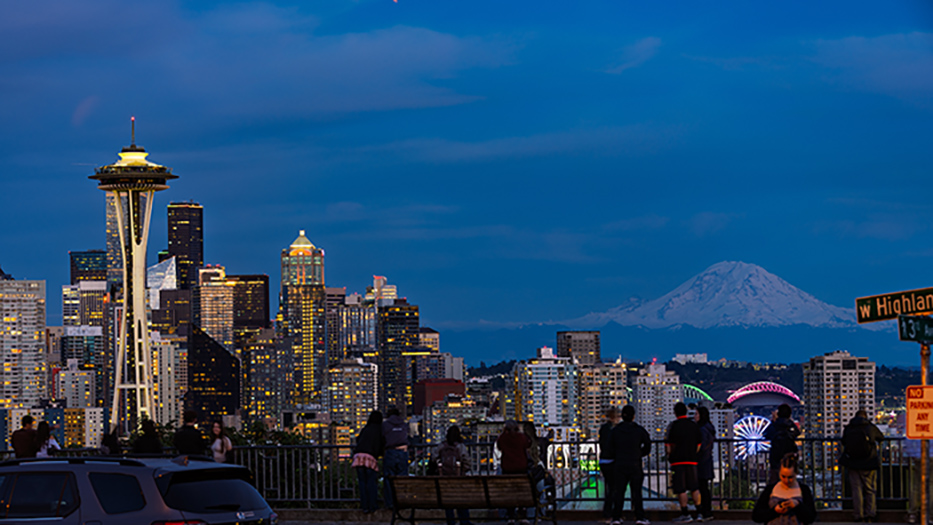
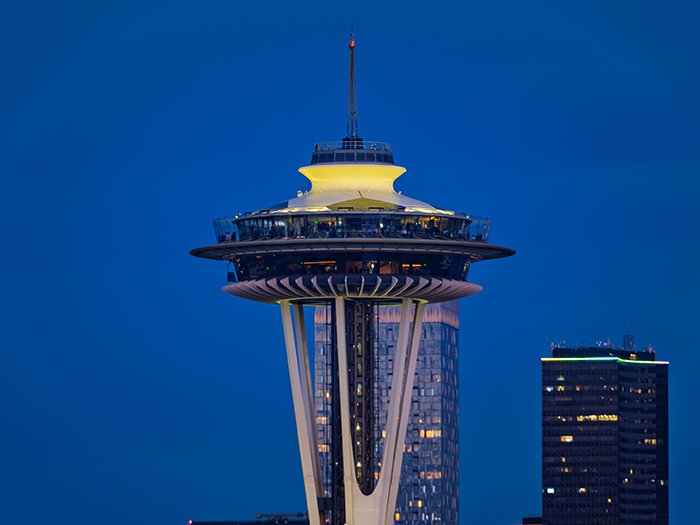
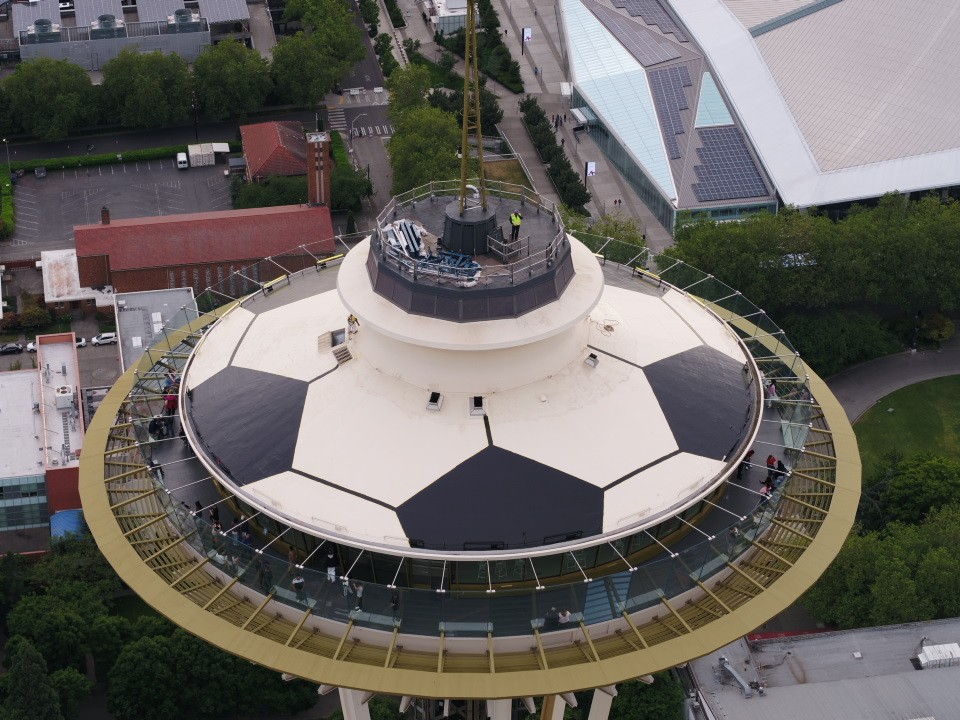
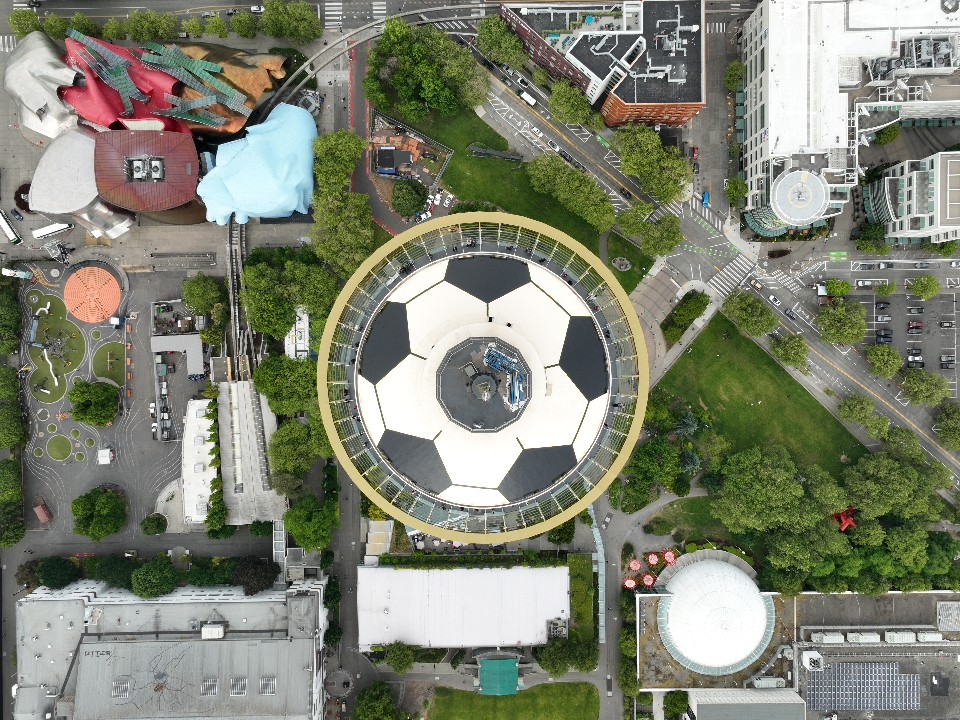
On June 5, 2026, Seattle looked up and saw something it had never seen before. The top of the Space Needle, the most recognized landmark in the Pacific Northwest, had become a giant soccer ball. With the world about to arrive for FIFA World Cup 2026, the city wanted a welcome that no one could miss. Long Painting Company is the team that put it 605 feet in the air.
The idea started as a simple question inside a brainstorming session with Seattle FIFA World Cup 26 (SeattleFWC26): if the whole world is watching Seattle, how do you welcome fans with something they have never seen before? A bold early sketch turned into a concept, and the concept turned into one of the most visible coating projects in the country. The finished roof is a symbol of the universal love of the game and of a region getting ready to host six World Cup matches and hundreds of thousands of visitors.
“This is more than a paint project. Our team understood from day one that we were helping create a moment that would be seen around the world.”
Jonathon Holca, General Manager, Long Painting Company
For a company that has spent decades on bridges, ferries, stadiums, hospitals, and high-rises, the Space Needle was familiar ground and brand new ground at the same time. Long Painting has worked on the Needle before. What made this project different was not the height or the steel. It was the audience. The work would be photographed, broadcast, and shared by millions, and it had to be flawless from the street and from the sky.
A landmark moment for Seattle and the World Cup
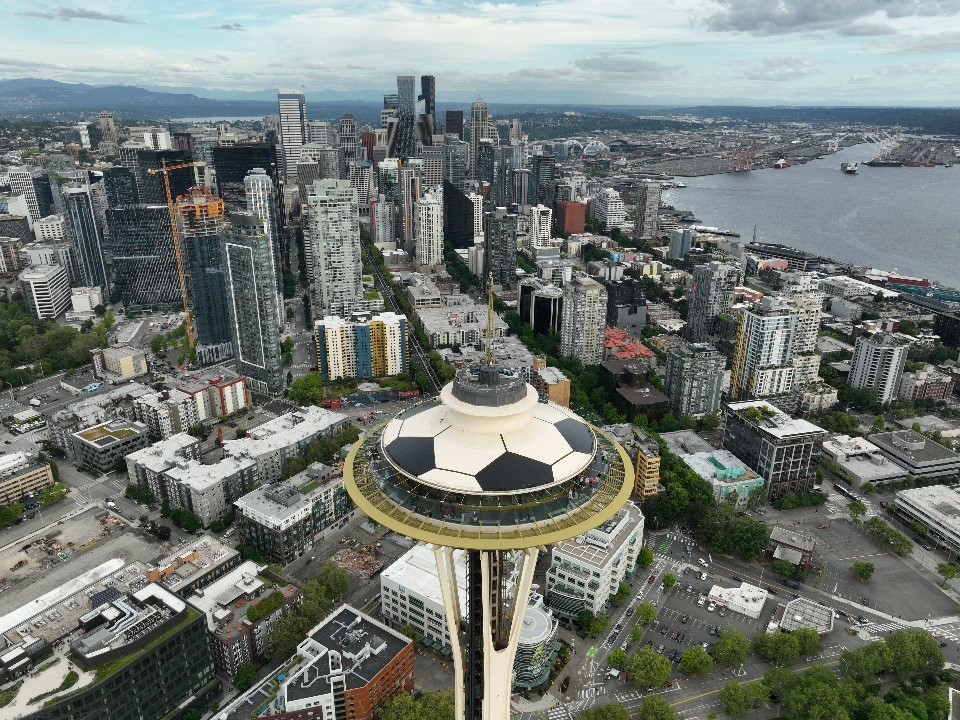
Seattle is one of 16 Host Cities across North America for FIFA World Cup 2026, the largest World Cup in history. The tournament is expected to draw millions of visitors and billions of viewers, and it gives the city a global stage. Local organizers wanted an image that would define Seattle’s moment, something instantly understood in any language. A soccer ball resting on top of one of the planet’s most photographed structures does exactly that.
The transformation came together through a partnership between the Space Needle and SeattleFWC26, with the physical work executed by Long Painting Company. The result is expected to become one of the signature images of Seattle’s World Cup celebration, and it will remain a centerpiece of the festivities throughout the tournament.
“The Space Needle is one of the most recognizable landmarks on the planet. Seeing it reimagined as a soccer ball sends a powerful message that Seattle is ready to welcome the world.”
Peter Tomozawa, CEO, SeattleFWC26
What made the Space Needle a hard place to paint
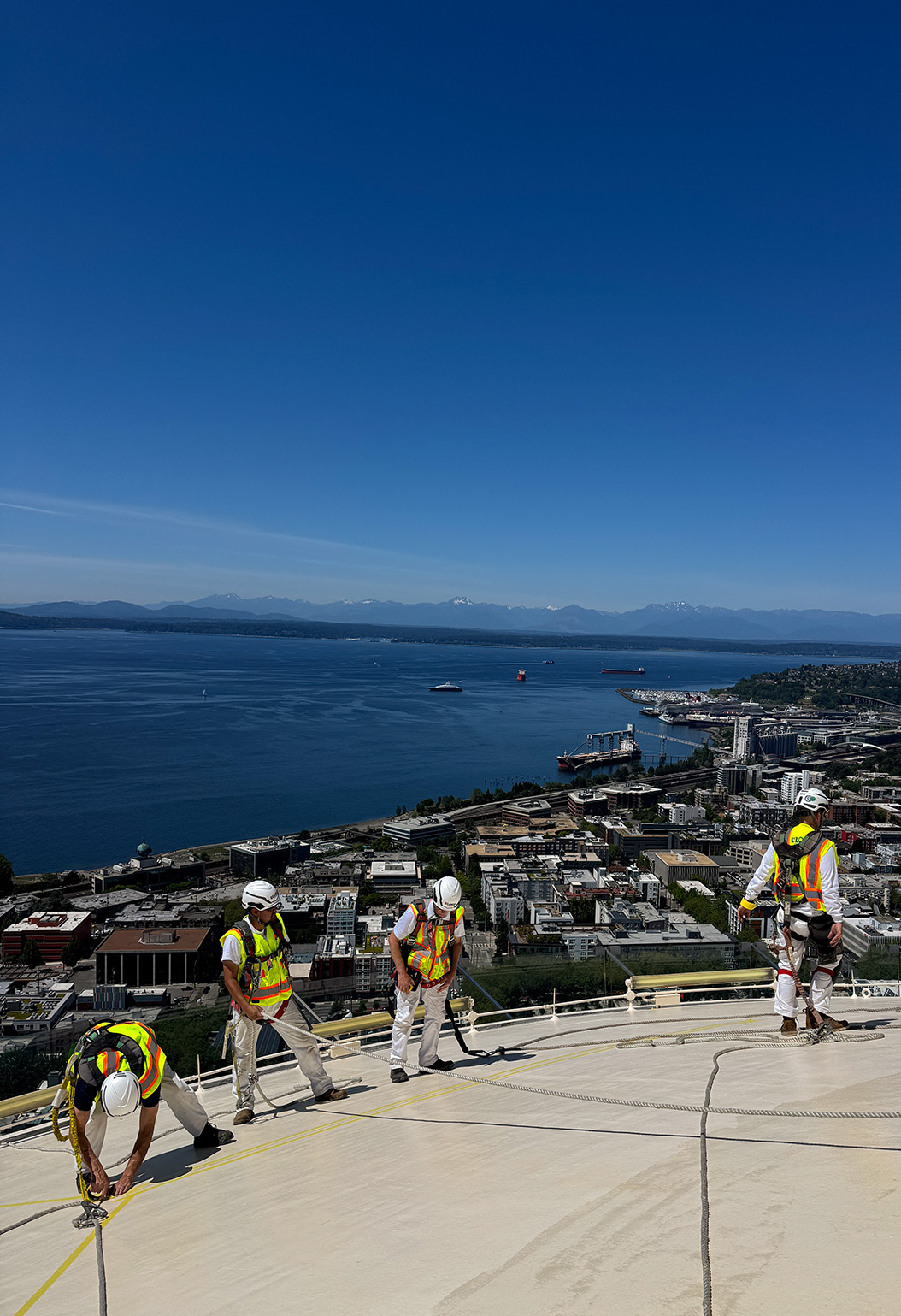
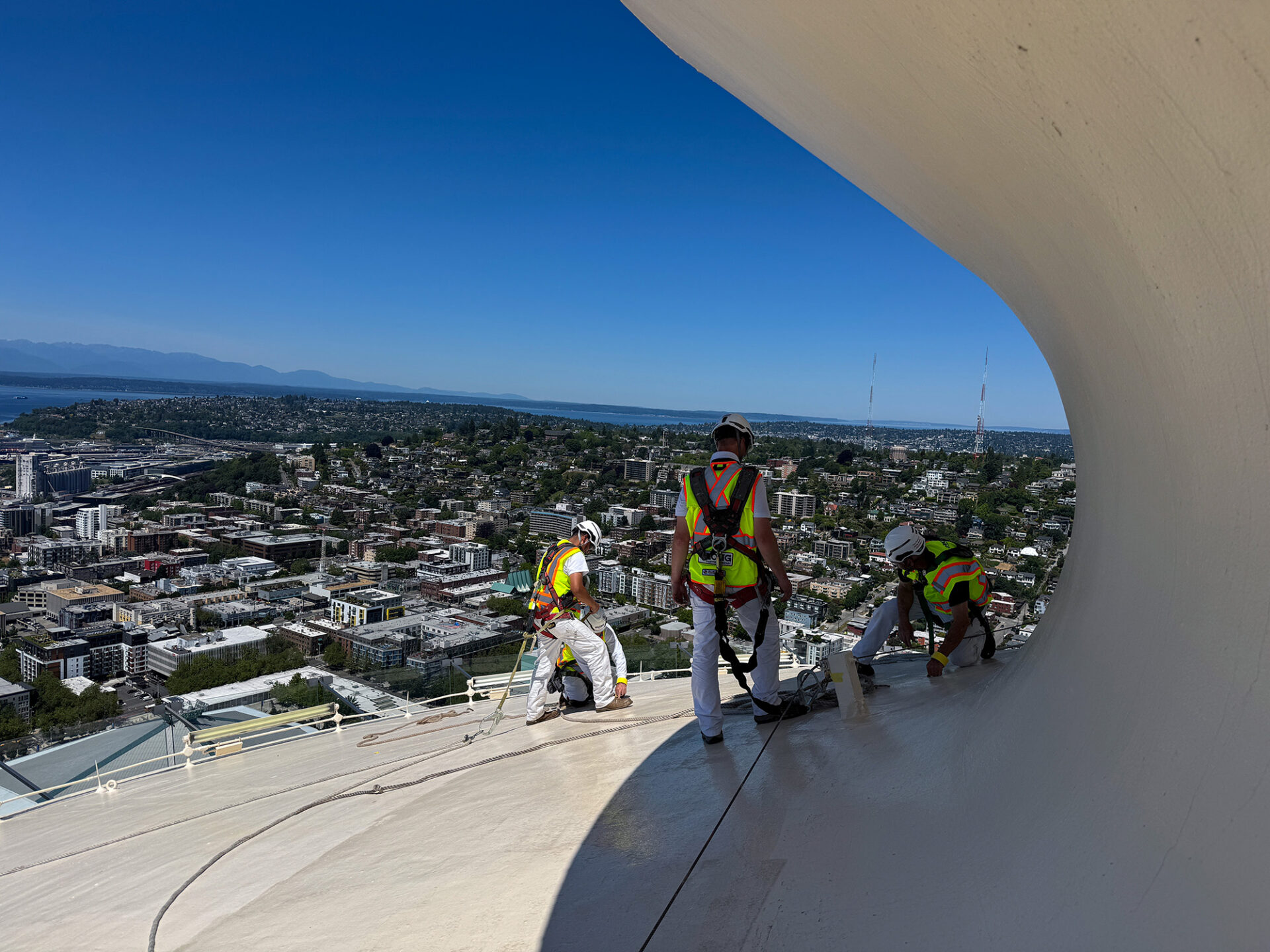
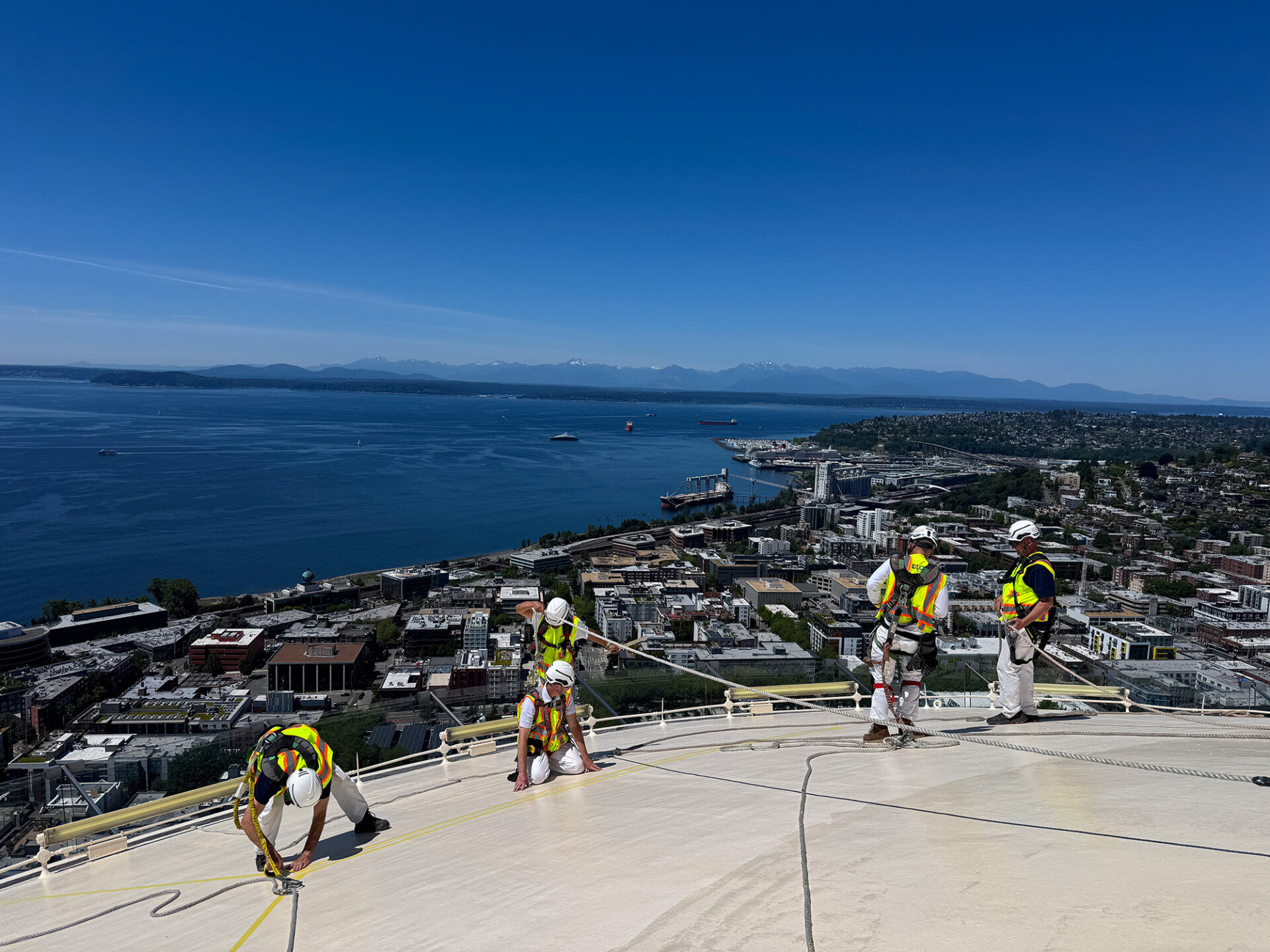
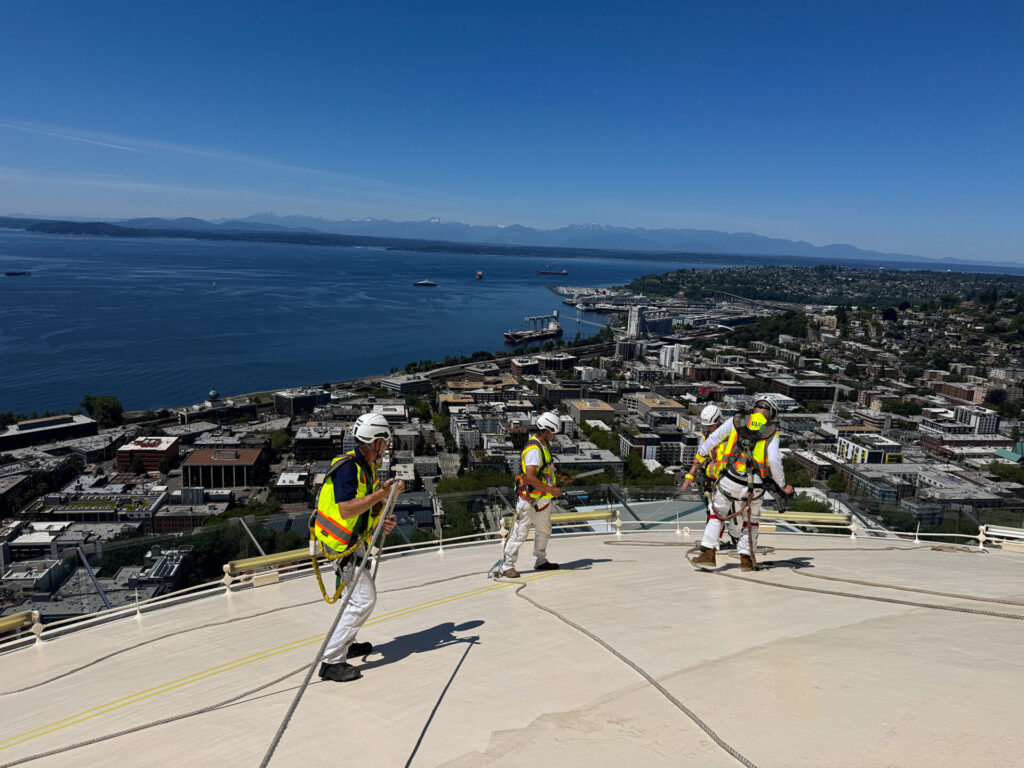
Painting at 605 feet is not painting with a longer ladder. Every part of the job changes when the work platform is a quarter of the way up a 1962 landmark that stays open to more than one million visitors a year. The design also had to read as a true soccer ball, which meant the geometry of the panels had to follow the curve of the Needle’s iconic sloped roof and still look correct from the ground, from the water, and from the air.
The conditions the crew planned around
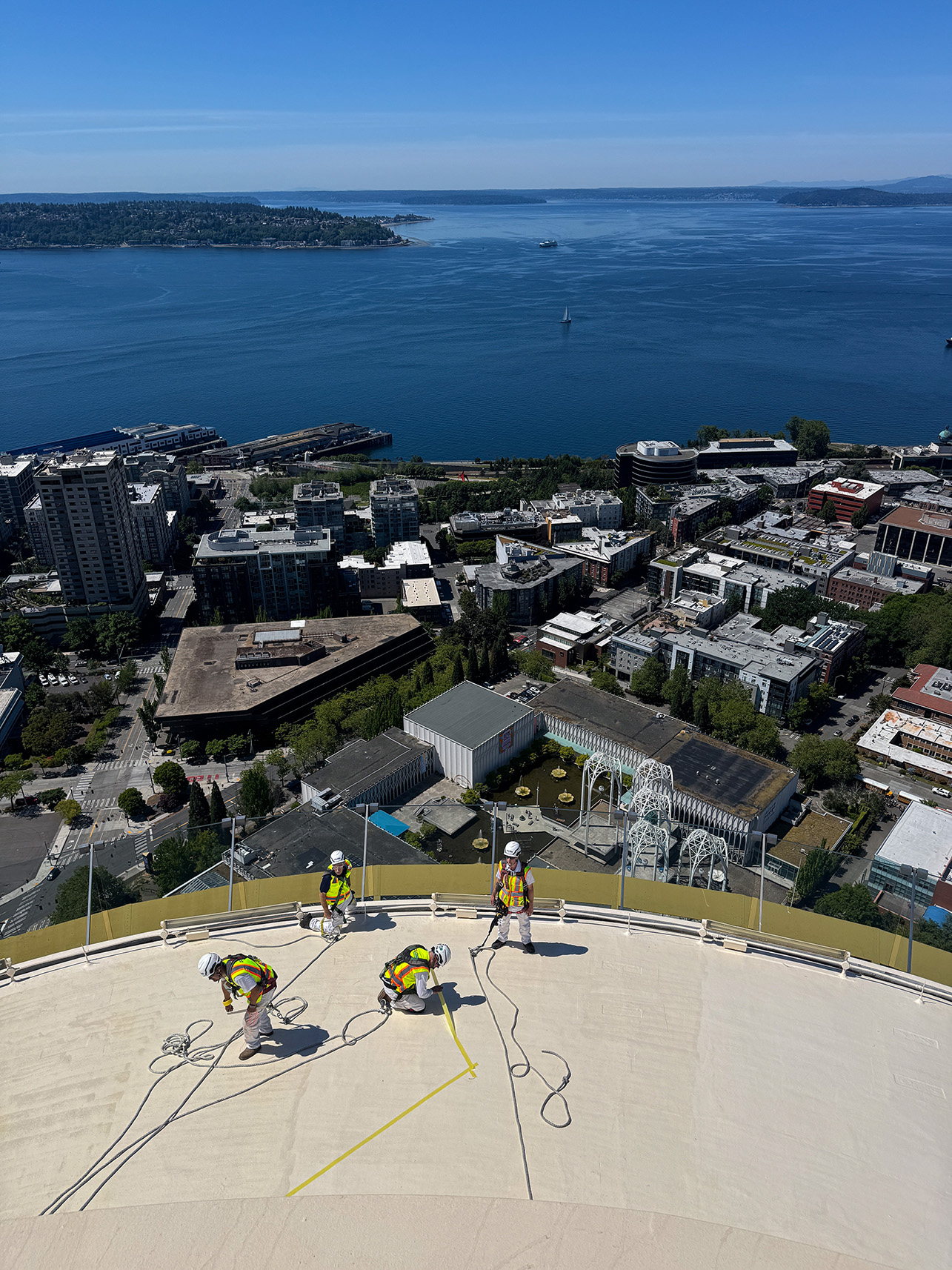
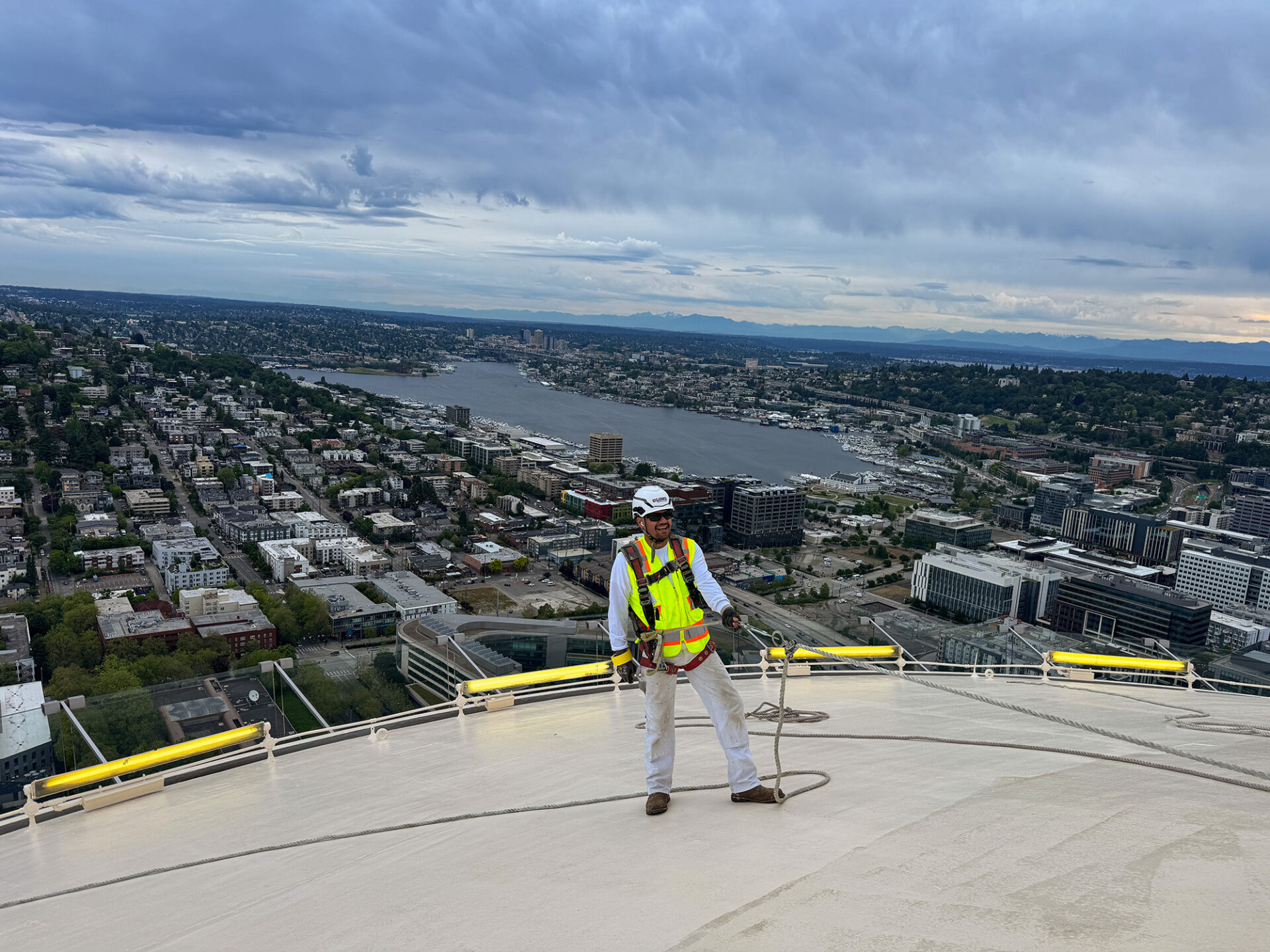
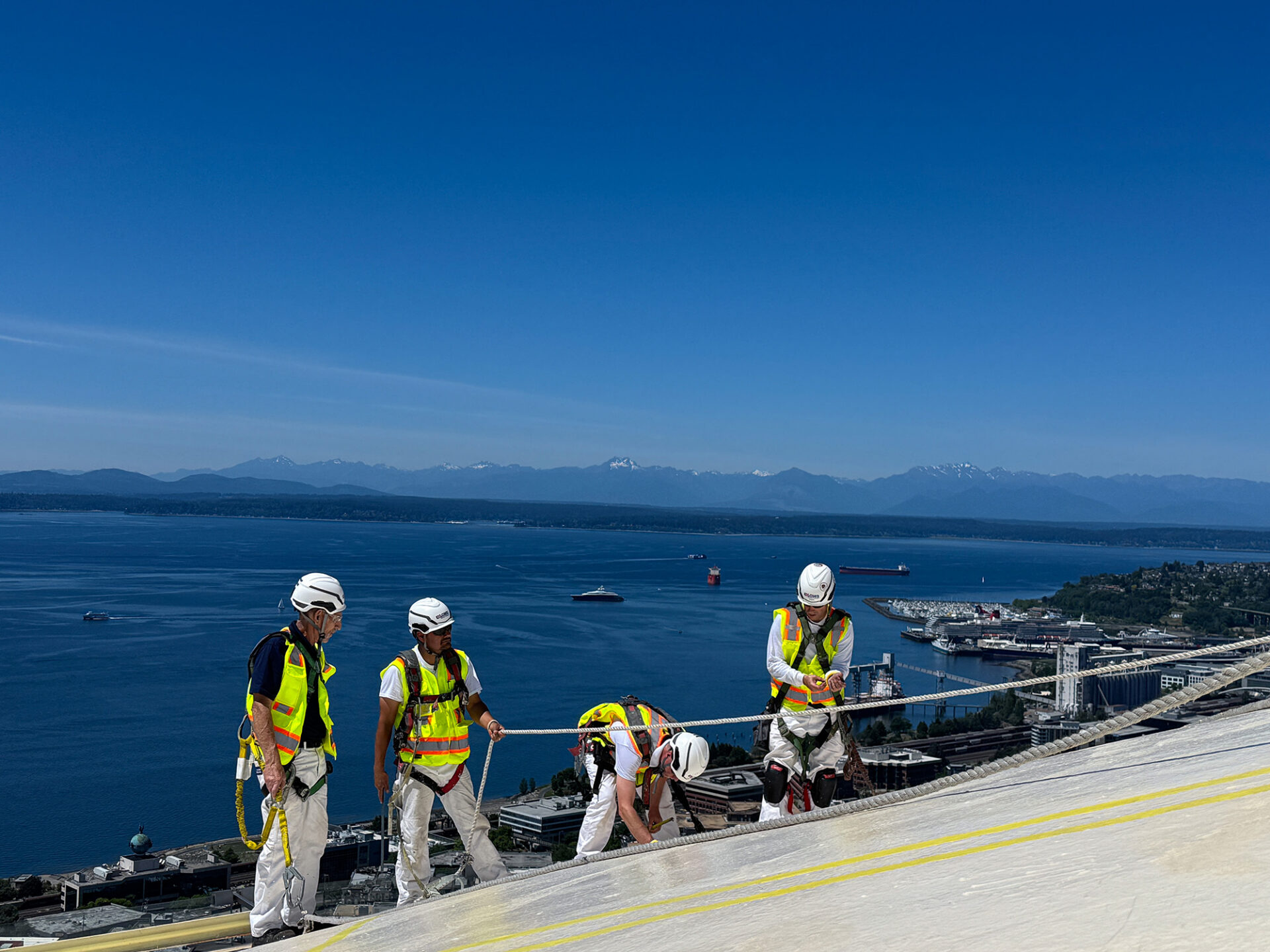
- Extreme height. Crews worked 605 feet above Seattle Center, where access, rigging, and fall protection drive every decision before a single coating goes down.
- A curved, sloped roof. The soccer ball pattern had to wrap a complex curved surface and still hold true proportions when viewed from street level and from broadcast cameras.
- Pacific Northwest weather. Coatings have tight temperature, humidity, and dry-time windows. The team tracked the forecast closely and timed the work to the conditions, not the calendar.
- An active, iconic site. The Space Needle stays open year round. Work had to be sequenced and coordinated so it never compromised the guest experience or the landmark itself.
- A zero-margin deadline. The reveal was tied to a fixed global event. There was no version of this where the work slipped past the World Cup.
How Long Painting executed the transformation
The answer to a project like this is preparation. Long before any color went on the roof, the team built a plan around access, safety, sequencing, and weather, then coordinated each step closely with the Space Needle’s own staff. Specialized equipment and precision planning let crews apply the custom soccer ball design safely on a surface that offers no room for error and no second take in front of a global audience.
The same discipline that protects a coating system on a bridge protected this one on a landmark. Surface readiness, controlled application, and tight quality checks turned a bold sketch into a clean, durable, camera-ready finish. The crew treated the Needle the way it treats every high-consequence structure: plan the work, work the plan, and leave the site better than you found it.
“Throughout its history, the Space Needle has played a role in some of the most defining moments for Seattle and the Pacific Northwest. This project celebrates the global connections, community spirit, and excitement the tournament will bring.”
Ron Sevart, CEO, Space Needle
Why a project like this lands with Long Painting
High-profile work rewards experience, and it punishes shortcuts. Long Painting was founded in 1967 and is one of the Pacific Northwest’s largest industrial and commercial coating contractors, with a track record on landmark structures that includes the Golden Gate Bridge and the Space Needle itself. That depth is exactly what a one-of-a-kind, no-do-over project demands: the engineering judgment to work safely at height, the craftsmanship to deliver a finish that holds up under the world’s cameras, and the project discipline to hit an immovable date.
Project at a glance
Frequently asked questions
Who painted the Space Needle soccer ball for the FIFA World Cup?
Long Painting Company, a Seattle-based commercial and industrial coating contractor founded in 1967, executed the soccer ball transformation. The project was a partnership between the Space Needle and Seattle FIFA World Cup 26 (SeattleFWC26), and Long Painting performed the coating work.
Why was the Space Needle turned into a soccer ball?
Seattle is one of 16 Host Cities for FIFA World Cup 2026 and will host six matches. The Space Needle was reimagined as a soccer ball to welcome fans from around the world and to create a defining visual symbol of Seattle’s role in the tournament. It was unveiled on June 5, 2026.
How high did crews work to paint the Space Needle roof?
Crews worked 605 feet above Seattle Center to apply the custom soccer ball design to the Needle’s iconic sloped roof. The project required specialized equipment, precision planning, and close coordination with the Space Needle team to complete the work safely.
How did Long Painting paint at that height safely?
The project was built on preparation. Long Painting planned around access, rigging, fall protection, site coordination, and weather windows, then sequenced the work so it never disrupted the landmark, which stays open year round. The same coating discipline the company applies to bridges and high-rises guided every step.
Has Long Painting worked on landmark structures before?
Yes. Long Painting is one of the Pacific Northwest’s largest industrial and commercial coating contractors and has delivered complex projects on landmark structures including the Golden Gate Bridge and the Space Needle, along with bridges, ferries, water treatment facilities, hospitals, schools, and high-rise buildings.
How long will the Space Needle soccer ball stay up?
The transformation is planned to remain a centerpiece of Seattle’s FIFA World Cup 2026 celebration throughout the tournament. For current timing, refer to the Space Needle and SeattleFWC26 announcements.